Ownership Is Not “Being At Fault”

Overhead view of a fault line separating two grey rock surfaces.

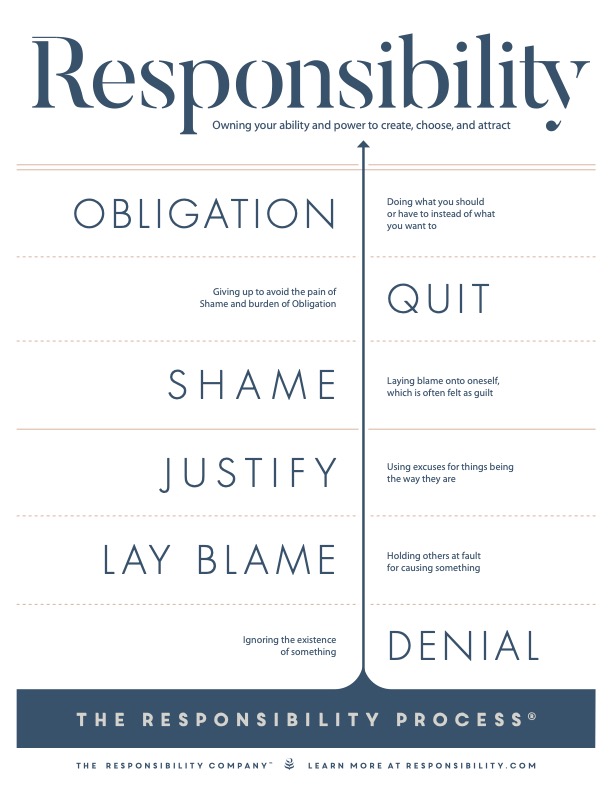
One hurdle that people learning to practice Responsibility stumble on is the feeling that taking 100% Ownership means “being at fault.” You’re conditioned by cultural norms and past experiences to believe in “justice” as an assignment of fault and consequences: These structures and programs reinforce your natural coping strategies of Lay Blame, Justify, Shame, and … Read more

“Acting Responsible” versus Being Responsible

A theater stage lit by multiple spotlights, where someone might "act responsible"

What’s the difference between “acting responsible” and being Responsible? Ownership. 100%. It’s about your actions being 100% your full and free choice, or being made to meet an external standard that lets you give ownership away. “Acting Responsible” “Acting” responsible is often “doing the right thing.” According to what standard? Who’s making the call on … Read more

You Must Be This Tall

A roller coaster beginning a downward section of the track.

There is no “You must be this tall to ride this ride” requirement for Responsibility. No apprenticeship. No “dues.” 10,000 hours not mandatory. You’ve already had many moments in your life where you’ve operated from the mental position of Responsibility. You may not have called it by that name. You faced a problem, you looked … Read more

Coping is protesting reality

An overhead view of a large crowd protesting.

Coping is protesting reality and being trapped in the past. The mental states described in The Responsibility Process® reveal this. Laying Blame is a protest that your current reality isn’t fair. Someone else did this, or caused it, or took your credit. They have to fix it because it didn’t turn out how you wanted … Read more

Dangerous Belief

The incorrect equation "1+1=3" on a chalkboard, representing a dangerous belief.

You carry a dangerous belief with you. One that impacts everything you do. You learned it growing up, at school, at home, around peers. With it, you take feel more anxious, risk less, and speak less. What is it? Wrong “Wrong” gets used too often. It’s a shorthand for “incorrect,” “mistake,” “moral failure.” Your brain … Read more